First Off... a personal story about insurance.
I recently had an unexpected $450 bill for labs, yes LABS, at my PCP. I requested a few labs that aren’t “routine” for a yearly physical (but SHOULD BE, but that’s a whole other topic). These non-routine labs such as fasting insulin, A1C, ferritin, and vitamin D weren’t covered, and are now my responsibility. That bill is AFTER insurance coverage. I have a pit in my stomach thinking about this because I looked up how much I would have saved if I had ordered these on my own through Bryan Lab on Demand. I would have paid $170 for the EXACT SAME LABS had I ordered them myself online. WILD. Like, what?! Hindsight – I will order my own and self pay from now on. What’s even crazier, is I found markers that were out of a functional range that my PCP said was normal (ferritin being one, hence the hair shedding, brittle nails, and slow creeping fatigue). Moral of the story is, conventional ranges do not tell the whole story AND make sure you are getting the best pricing for your labs that you can.
The GOOD NEWS: Insurance can cover visits with me at 100%! I get about 90% of all visits for patients covered at 100%. If I can’t, I will tell you up front if your visits might go towards your deductible or be denied. While I cannot bill labs to your insurance, we will pick the right ones for your particular situation and figure out the most cost effect solution, so you get the most from your investment and we move you in the right direction to start healing. PLUS – if you’re a member, you have access to labs at discounted member rates!
Case Study: Recurring SIBO
The lab I run most often for patients with gut and digestive issues is a functional stool test called GI-MAP with OMX.
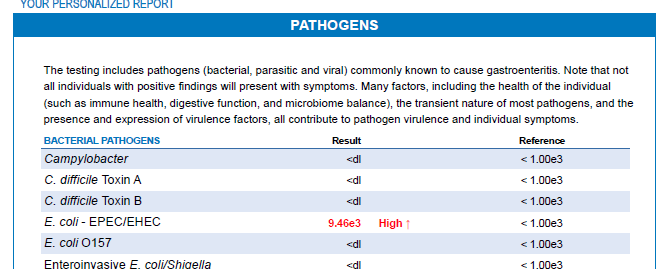
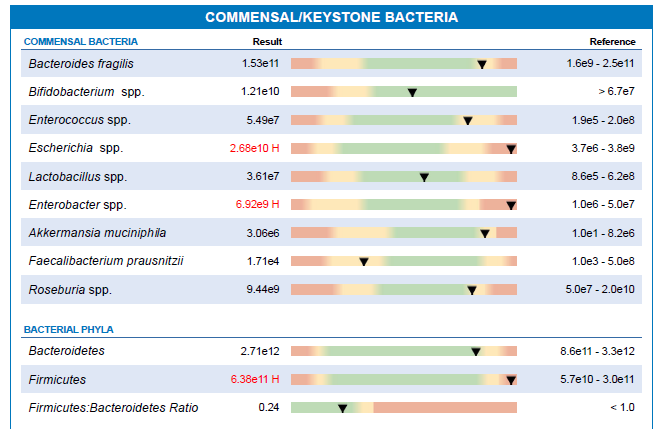
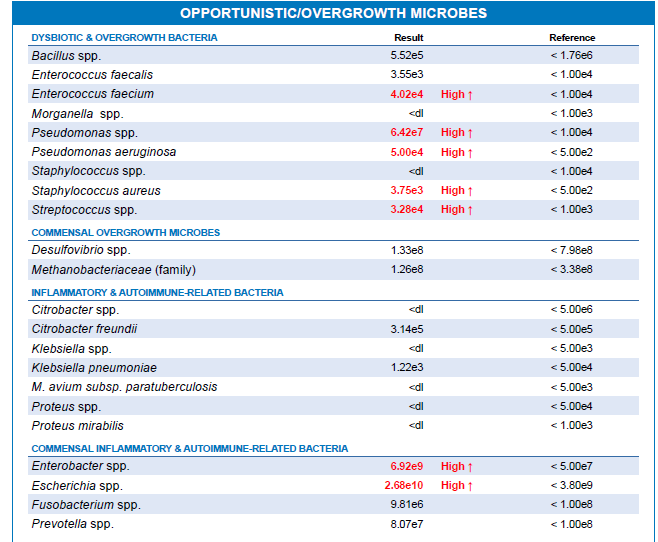
Most of my patients who come to me with ongoing gut symptoms benefit from taking a closer look at what’s actually happening inside their microbiome and digestive system. The GI-MAP gives me insight into bacterial and parasitic pathogens, fungus such as Candida, and viruses, along with other markers that help paint a bigger picture of gut health.
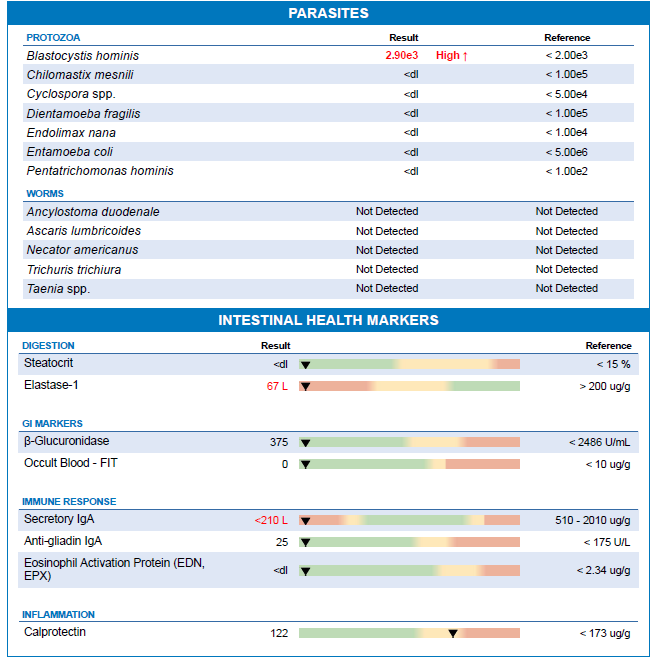
It also lets me look at how well your digestive system is functioning by checking markers like pancreatic elastase (digestive enzyme production), fat in the stool, inflammation markers such as calprotectin and secretory IgA (sIgA), and overall microbiome balance or imbalance.
OMX is an optional add-on that gives me additional information about bile acids and short-chain fatty acids, which can tell us more about how your gut is processing fats and fermenting fiber.
I use these results to look for patterns that may be contributing to digestive dysfunction, intestinal permeability (“leaky gut”), microbiome imbalances, pathogen overgrowth, poor digestion, and gut inflammation. From there, we can build a more targeted nutrition and functional gut health protocol instead of simply guessing at what might be going on.
And this is important: functional stool testing like the GI-MAP is not commonly part of a conventional healthcare workup for chronic digestive symptoms. That means there may be information worth looking at that hasn’t been evaluated yet.
The goal isn’t just to find something abnormal on a test. It’s to connect the dots, understand what may be driving your symptoms, and create a plan to support your gut and address the underlying issues.
THE CASE
70yr old presenting with recurring SIBO, lactose + fructose intolerance, weight loss, elevated cholesterol & blood pressure, constipation, abdominal pain, bloating, excessive gas, nausea, with several hospital stays.
What we found: opportunistic bacteria overgrowth, parasite, pathogen overgrowth, and high need for digestive support
What We Did
My process is simple and streamlined. First, we stabilized the gut and added digestive support. Then we tackled the overgrowths—first targeting the opportunistic bacteria, followed by parasites and the overall gut terrain.
From there, we worked on removing what was contributing to the symptoms using targeted supplements and binders, and then shifted our focus to replenishing and repairing the gut.
All in all, this process took about one year. And the results? The patient reported regaining weight, sleeping better, no more abdominal pain, regular bowel movements, and being able to tolerate more foods.
I know what you’re thinking…
“It took A YEAR?!”
Yes, my friend.
Deep healing and root cause work takes time, patience, and commitment. When you’ve been dealing with chronic gut issues for months or even years, it usually isn’t realistic to expect everything to turn around in a few weeks.
But wouldn’t it be nice to not feel like that patient did ever again?
To understand what’s actually going on instead of constantly chasing symptoms?
To eat without wondering what food is going to send your gut into a tailspin?
To have regular digestion, less pain, better sleep, and more confidence in your body again?
Does this sound all too familiar?
Supplement Spotlight
I love a good collagen. Up until 6 weeks ago, I myself had been using just a general collagen by Codeage. Then, I ran across research on collagen peptides, specifically FORTIBONE, FORTIGEL, and VERISOL, and changed my mind on the product I was using! Studies show that Fortibone significantly increases bone mineral density in post-menopausal women, Fortigel can strengthen tendons and ligaments, and Verisol can increase skin hydration and elasticity, thus improving the look of wrinkles.
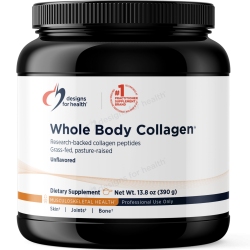
There are likely many collagen products with the 3 collagen peptides in them, but I’m all about no fuss and simplicity. I like the Designs for Health Whole Body Collagen because 1) it’s on Fullscript!, 2) it mixes easily, and 3) no artificial or natural “flavors” or sweeteners. I add a scoop to my smoothie, but you could easily mix into yogurt, juice, or even plain water.
PMID: 34520654, PMID: 29337906, PMCID: PMC4045593, PMID: 24401291, PMID: 38811471, PMID: 33742704
If you’ve been feeling off for a while—dealing with bloating, abdominal pain, irregular bowel movements, food sensitivities, fatigue, brain fog, or other digestive symptoms—and still haven’t gotten clear answers, it may be time to look beyond the symptoms and take a deeper look at your gut health and the root causes behind what’s going on.
Need to take a deeper dive into your gut health?
FAQ - stool tests
What is a functional stool test?
A functional stool test looks at how your gut is actually functioning by analyzing digestion, inflammation, immune activity, and the gut microbiome. It’s commonly used by functional and integrative practitioners to help uncover root causes of chronic symptoms.
What can a functional stool test tell you about your health?
These tests can reveal microbial imbalances, pathogens, inflammation, digestive enzyme output, gut barrier dysfunction, and immune activation—factors that can contribute to bloating, fatigue, hormone issues, nutrient deficiencies, and chronic inflammation.
Which functional stool test is the most accurate?
Tests that use whole genome sequencing, such as BiomeFX, are considered more comprehensive and precise than PCR-based tests because they analyze the full genetic makeup of gut microbes.
Is GI-MAP or Gut Zoomer better?
GI-MAP is more affordable and useful for identifying pathogens and basic digestive markers. Gut Zoomer is more comprehensive and evaluates digestion, inflammation, gut barrier function, and the microbiome in greater detail. The best option depends on symptoms, goals, and budget.
Do I need a practitioner to order or interpret a stool test?
Most advanced functional stool tests require a healthcare provider to order and interpret them. Practitioner guidance helps ensure results are understood correctly and translated into personalized, actionable recommendations.
Are at-home stool tests accurate?
At-home stool tests can be accurate in lab analysis, but interpretation and recommendations are often generalized. Working with a practitioner allows results to be evaluated within the context of your symptoms, history, and overall health.
*This blog on the LiveEatPerform Nutrition LLC website is maintained by Lindsey Remmers, Owner. All opinions are her own and for general educational purposes. Advertising, affiliate links or other forms of compensation are within this website and a small commission is earned for sales made through these links (with no extra cost to you) that help cover costs of running a small business. Products and services listed are prior carefully created and/or evaluated to ensure that they are accurate and supported by scientific evidence. Items or programs that are endorsed are based on Lindsey’s professional experience and expertise & are worthy of such endorsement. LiveEatPerform Nutrition LLC assumes no responsibility or liability for damage or injury to persons arising from any use of any product, information, or opinion contained in the information of this blog, none of which is to be considered personal medical advice. By viewing, using, and shopping from this website, you agree to release LiveEatPerform Nutrition LLC from full responsibility to the fullest extent allowed by law. Products & Services sold are not intended to diagnose or cure any disease. Consult your physician before beginning any exercise, supplement, meal plan or program.
Last Updated on August 24, 2026 by Lindsey Remmers