
What's In a Functional Stool Test (and Which One is Actually Worth It)?
Did you know we can glean a lot of information from your poo? Yep—your stool can tell us a surprising amount about your gut health. Inflammation, digestive function, microbiome balance… all from a tiny sample.
Gross? Sure. Powerful? Absolutely.
It might not be glamorous, but functional stool testing is one of the most insightful tools we have when someone has been feeling “off” and can’t quite figure out why. That said, not all stool tests are created equal, and choosing the right one really matters.
In this post, I’ll walk you through the three functional stool tests I use most often in practice—GI-MAP, Gut Zoomer, and BiomeFX—why they’re different, and how we decide which one makes the most sense for each person.
How Functional Stool Tests Work
Before we get into the individual tests, it helps to understand how stool samples are analyzed. There are two main technologies used in functional stool testing: PCR and whole genome sequencing.
PCR TESTING
PCR (polymerase chain reaction), which is used in tests like the GI-MAP, looks at very specific segments of microbial DNA or RNA. Those segments are amplified in the lab so we can infer whether certain microbes are present—and in what quantity.
PCR testing can be very helpful clinically, especially when we’re looking for known pathogens or specific troublemakers. It’s also more affordable and tends to have a quicker turnaround time. The tradeoff is that it only looks at small pieces of genetic material, rather than the full picture.
WHOLE GENOME SEQUENCING
Whole genome sequencing analyzes the entire genetic blueprint of the microbes in your stool. Because of that, it can identify microbes more precisely and give us a deeper understanding of overall microbiome diversity and function.
This method is considered the gold standard for comprehensive microbiome analysis, though it’s more expensive and requires more nuanced interpretation.
The Functional Stool Tests I Use In Practice
The GI-MAP is a PCR-based stool test that detects microbial DNA from bacteria, parasites, fungi, and viruses. It also includes markers related to digestion, inflammation, and immune activity.
I use the GI-MAP often because it’s more accessible cost-wise and provides clinically useful digestive data—especially when we’re trying to identify pathogens or obvious gut dysfunction.
GI-MAP Pros
- More budget-friendly than advanced sequencing tests
- Useful for identifying specific pathogens linked to symptoms
- Includes digestive markers like pancreatic elastase, steatocrit, and calprotectin
- Assesses immune and inflammatory activity
- Faster turnaround time (often 7–10 days)
- Optional bile acids analysis
GI-MAP Cons
- Uses older 16S rRNA PCR technology
- Identifies bacteria mostly at the genus level, not the species level
- Fewer total markers compared to more comprehensive tests
- Less insight into overall microbiome diversity and function

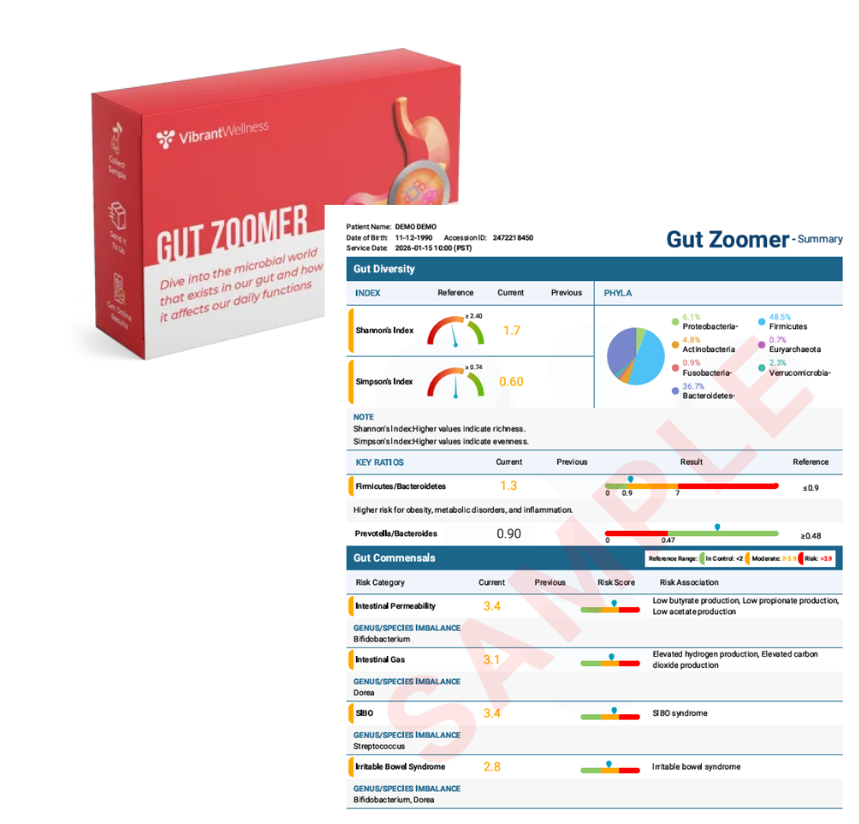
The Gut Zoomer is one of the most comprehensive stool tests available. It evaluates over 200 microbial and functional markers, including bacteria, viruses, fungi, parasites, digestion, inflammation, metabolism, and gut barrier integrity. The test uses a combination of PCR, microarray, and other detection methods to analyze stool samples.
What I appreciate most about the Gut Zoomer is how well it helps connect the dots. It includes markers related to bile acids, leaky gut (such as zonulin, anti-actin, and anti-LPS), and immune activation, which can clarify why symptoms are happening—not just what’s present.
Gut Zoomer Pros
- Extremely comprehensive (200+ markers)
- Advanced testing technology
- Deep insight into gut barrier function and immune activation
- Helpful for complex or chronic symptoms
- Strong differentiation between microbiome imbalance, digestion issues, and immune-driven symptoms
Gut Zoomer Cons
- Most expensive option
- Results are complex and require trained interpretation
- Can identify findings that may not be clinically meaningful without context
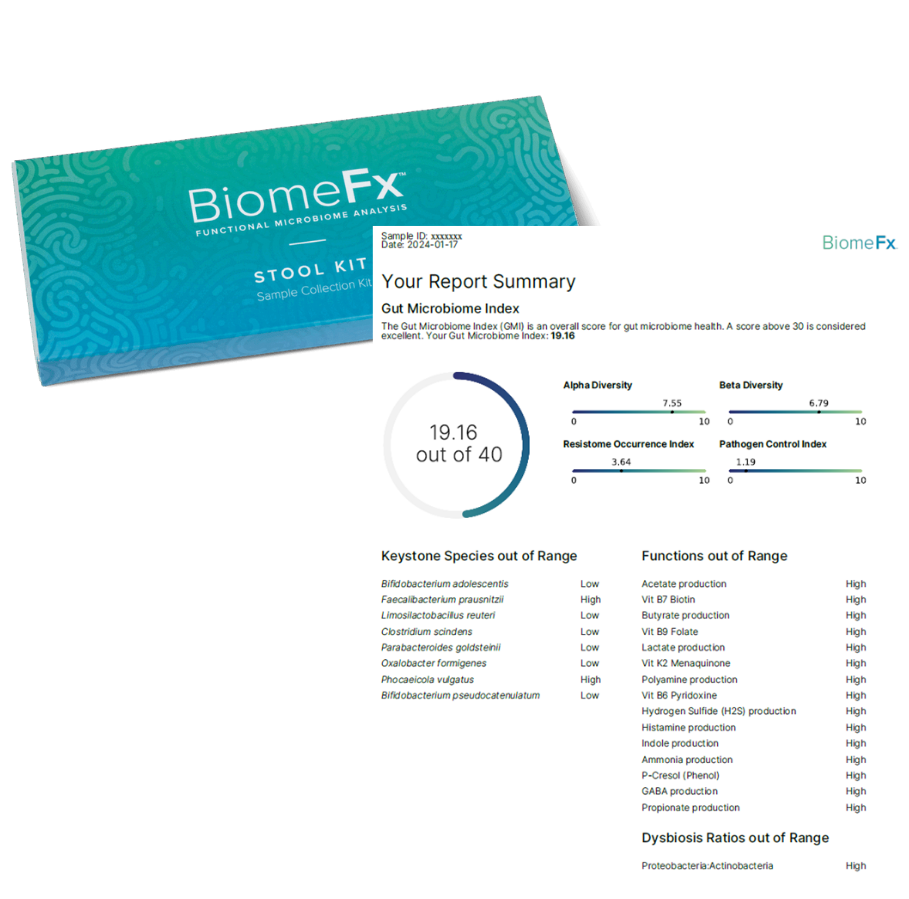
BiomeFX uses whole genome sequencing to assess microbial diversity, functional pathways, metabolic activity, and dysbiosis patterns.
Instead of focusing heavily on digestion or inflammation, BiomeFX looks at how the microbiome functions as a whole. This makes it especially useful for patients who don’t have strong digestive symptoms but suspect deeper gut-related imbalances.
BiomeFX Pros
- Uses whole genome sequencing
- Strong focus on microbiome diversity and function
- Insight into metabolic and functional activity of the gut ecosystem
- Helpful for patients with generally stable digestion
BiomeFX Cons
- Fewer digestive and inflammatory markers than Gut Zoomer
- Functional data can be complex to interpret
- More expensive than GI-MAP
- Requires clinician guidance for meaningful interpretation
So… Which Functional Stool Test is Best?
There’s no one-size-fits-all answer—it depends on symptoms, goals, and budget.
- If affordability is key and we’re looking for pathogens and basic digestive markers, GI-MAP is often a great starting point.
- If we need the most comprehensive, whole-ecosystem view of gut health, Gut Zoomer is the gold standard.
- If the focus is on microbiome diversity and functional activity—especially in someone without major digestive complaints—BiomeFX can be a strong middle-ground option.
Wait - What About the Tiny Health Stool Test?
Tiny Health uses whole genome sequencing and is available direct-to-consumer, meaning no provider order is required. That makes it appealing for people who want to explore their microbiome independently.
The tradeoff is that recommendations tend to be more generalized and not tailored to a full clinical picture. In practice, provider-guided testing allows for more personalized interpretation and targeted next steps—but Tiny Health can still be a useful entry point for some.
Why Functional Stool Testing Can Be So Helpful
In practice, I use these tests to identify patterns linked to leaky gut, immune reactivity, microbiome imbalances, overgrowth, and reduced detox capacity. These issues don’t always cause obvious digestive symptoms, but they can quietly contribute to chronic inflammation, hormone imbalances, nutrient malabsorption, and that lingering feeling of not quite being yourself.
However, I DO use these tests to help identify patterns into WHY someone may be experiencing chronic, repetitive digestive issues and symptoms like:
- bloating
- gas
- diarrhea
- constipation
- acid reflux
- chronic hunger
- indigestion
- recurring SIBO
- brain fog
- feelings of fullness
- fatigue
- and more
If you’ve been feeling off for a while and haven’t gotten clear answers, it may be time to look a little deeper at what’s happening inside your gut.
Need to take a deeper dive into your gut health?
FAQ
What is a functional stool test?
A functional stool test looks at how your gut is actually functioning by analyzing digestion, inflammation, immune activity, and the gut microbiome. It’s commonly used by functional and integrative practitioners to help uncover root causes of chronic symptoms.
What can a functional stool test tell you about your health?
These tests can reveal microbial imbalances, pathogens, inflammation, digestive enzyme output, gut barrier dysfunction, and immune activation—factors that can contribute to bloating, fatigue, hormone issues, nutrient deficiencies, and chronic inflammation.
Which functional stool test is the most accurate?
Tests that use whole genome sequencing, such as BiomeFX, are considered more comprehensive and precise than PCR-based tests because they analyze the full genetic makeup of gut microbes.
Is GI-MAP or Gut Zoomer better?
GI-MAP is more affordable and useful for identifying pathogens and basic digestive markers. Gut Zoomer is more comprehensive and evaluates digestion, inflammation, gut barrier function, and the microbiome in greater detail. The best option depends on symptoms, goals, and budget.
Do I need a practitioner to order or interpret a stool test?
Most advanced functional stool tests require a healthcare provider to order and interpret them. Practitioner guidance helps ensure results are understood correctly and translated into personalized, actionable recommendations.
Are at-home stool tests accurate?
At-home stool tests can be accurate in lab analysis, but interpretation and recommendations are often generalized. Working with a practitioner allows results to be evaluated within the context of your symptoms, history, and overall health.
*This blog on the LiveEatPerform Nutrition LLC website is maintained by Lindsey Remmers, Owner. All opinions are her own and for general educational purposes. Advertising, affiliate links or other forms of compensation are within this website and a small commission is earned for sales made through these links (with no extra cost to you) that help cover costs of running a small business. Products and services listed are prior carefully created and/or evaluated to ensure that they are accurate and supported by scientific evidence. Items or programs that are endorsed are based on Lindsey’s professional experience and expertise & are worthy of such endorsement. LiveEatPerform Nutrition LLC assumes no responsibility or liability for damage or injury to persons arising from any use of any product, information, or opinion contained in the information of this blog, none of which is to be considered personal medical advice. By viewing, using, and shopping from this website, you agree to release LiveEatPerform Nutrition LLC from full responsibility to the fullest extent allowed by law. Products & Services sold are not intended to diagnose or cure any disease. Consult your physician before beginning any exercise, supplement, meal plan or program.

